An integrated livestock production campus by GRAMIKA
A working farm. A closed loop. A better way.
2.86 acres of land in Cumilla, home to cattle, goats, and dumba : fed by our own grass, powered by our own biogas and solar, and returning every by-product to the soil.
- 286 Shatak Master Plan
- Zero-Waste Circular Economy
- On-farm renewable energy
Why We Built This
For too long, livestock in Bangladesh has been squeezed by three problems: unsafe feed, expensive inputs, and waste with nowhere to go. Our campus was designed to solve all three at once : and to do it in a way that leaves the land and the community better than we found it.
The Feed Problem
Most farms in Bangladesh depend on outside feed with unknown quality. We grow our own, on our own land, so we control what our animals eat.
The Waste Problem
Cattle waste is usually a headache. Here, it becomes biogas for cooking and electricity, and vermicompost for the soil. Nothing is thrown away.
The Trust Problem
People want to know where their meat comes from. Our campus is traceable end-to-end : one place, one team, one clear story.
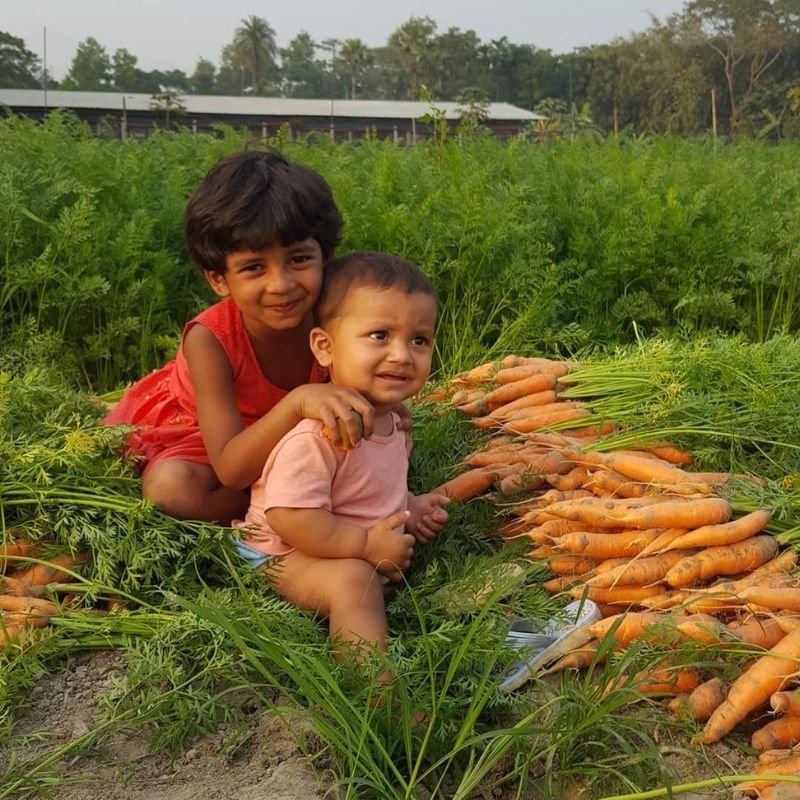
Vision & Mission
To be one of Bangladesh’s most modern, environmentally responsible, and community-rooted livestock production campuses.
- Produce safe, healthy, and high-quality beef, goat, and dumba : food you can trace to a real place.
- Grow our own feed and fodder end-to-end, so our animals eat only what we know.
- Turn every by-product back into value : organic fertiliser for farms, renewable energy for the campus.
- Lift the community around us with year-round work, training, and steady demand for local produce.
A Zero-Waste Circular Economy
Beef production sits at the centre. Around it, feed, fodder, renewable energy, organic fertiliser, a goat and dumba wing, and an agro-experience zone all support and feed back into each other. Waste from one becomes fuel for the next.
Beef Production
Cattle raised on our own feed, in shelters designed for animal welfare and hygiene.
Feed & Fodder
High-yield grass, silage bunkers, and an in-house feed mixer. What our animals eat, we grow.
Organic Fertiliser
Cattle waste converted into commercial-grade vermicompost, then sold back to farmers.
Renewable Energy
Commercial biogas plant and rooftop solar. Our own dung fuels our own kitchens.
Goat & Dumba Wing
Purpose-built shelters and a trained handling team for smaller livestock.
Agro Experience
A future phase : bringing school groups, families, and curious visitors onto the land.
Built in Four Phases
The full 2.86-acre master plan is fixed from day one. But we build it in phases, one steady step after another, so nothing is over-promised and nothing is under-delivered.
Phase 1
Foundation
Beef, goat, and dumba production begins. Core infrastructure, animal shelters, water lines, feed storage, and basic transport are set up.
Phase 2
Expansion
A second cattle shelter doubles our capacity. The feed processing unit is modernised and scaled for commercial output.
Phase 3
Sustainability
The commercial biogas plant, the vermicompost unit, rooftop solar, a mini veterinary centre, and a small dairy line come online.
Phase 4
Value Chain
A modern meat processing unit, an agro-experience zone, horse riding, an R&D and training centre, and a B2B supply hub complete the campus.
Nothing Wasted. Ever.
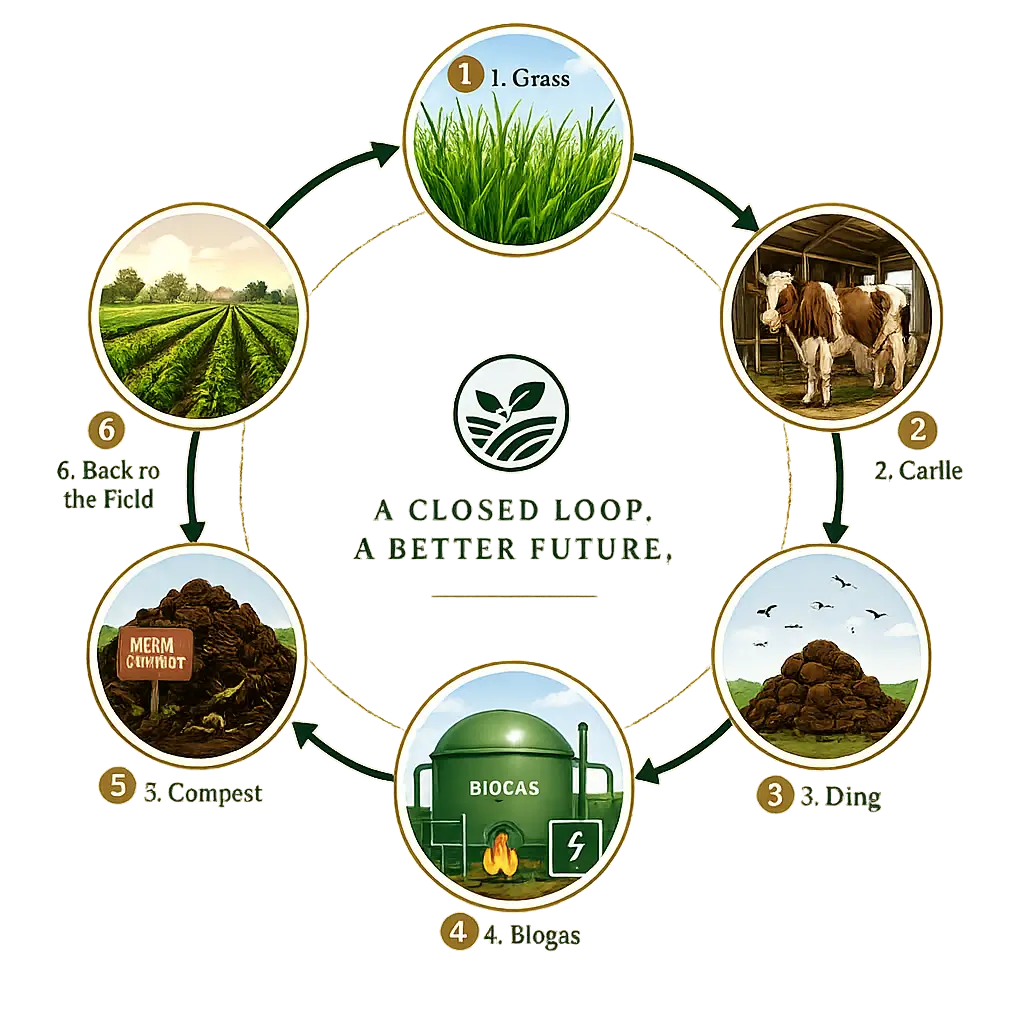
Everything on the campus flows in a loop. Grass grows in our fields and feeds the cattle. The cattle produce dung. The dung feeds the biogas plant, which produces cooking gas and electricity for the campus. What is left of the dung goes to the vermicompost unit and comes back out as organic fertiliser : some of which returns to our own fields, and some of which we sell to farmers in the district. The rooftop solar handles the daytime power load. Water is recycled. Rain is harvested.
- Grass: We grow high-yield fodder on our own land.
- Cattle: Cattle are raised on that fodder in hygienic shelters.
- Dung: Every day, cattle waste goes to the biogas plant.
- Biogas: Gas for cooking and electricity for the campus.
- Compost: What is left becomes vermicompost : a rich organic fertiliser.
- Back to the Field: The compost returns to our fields, and to farms across the district.
What Stands on the Land Today
This is not a rendering-only project. Real structures are going up on real land, with real teams working on them. Here is what the current phase brings to the ground.
Cattle shelter for 250 animals, built with a proper MS structure
Dedicated shelters for goats and dumba
A quarantine shelter for new arrivals and sick animals
Feed and fodder warehouse
A small office and administration block
Deep tube well and overhead water tank
Feed troughs, water lines, and internal distribution
A commercial grass chopper for fodder processing
Farm-ready transport : a Bhobhoti vehicle and two pick-up vans
Brick soling roads and a basic drainage network
On-site electrical works
Trained construction and farm labour teams on the ground
The Campus in a Nutshell
2.86 acres
Total land under the master plan
250 + 50 + 20
Cattle, goats, and dumba in the first phase
500 cattle
Capacity after Phase 2 expansion
100%
Feed grown on our own land
The Ripple That Reaches the Village
A farm is only as strong as the community around it. When we grow, the village grows with us : through steady jobs, better prices for local produce, cleaner soil, and a shared sense of pride in what we build together.
Local jobs
Year-round work for farm hands, technicians, drivers, and support staff : many hired from villages within walking distance.
Better soil
Our vermicompost goes back to fields across the district, replacing chemical fertiliser one bag at a time.
Training
A future training centre will teach modern, humane, and sustainable livestock practices to local farmers.
Safe food
A traceable meat supply for families who want to know exactly where their food came from.
How We Choose to Build
The way we build says as much as what we build. These are the promises that shape every decision on the campus.
- No hormones, no growth boosters. Our animals grow at their own pace.
- No feed of unknown origin. If it enters the shelter, we grew it or we know who did.
- Nothing thrown away. Every by-product has a next step in the loop.
- No chemical fertiliser on our fields. What we grow is fed by what our animals return.
- No shortcuts on animal welfare. Space, ventilation, clean water, and a trained team, always.
- Solar first. Grid backup only when the sun is not enough.
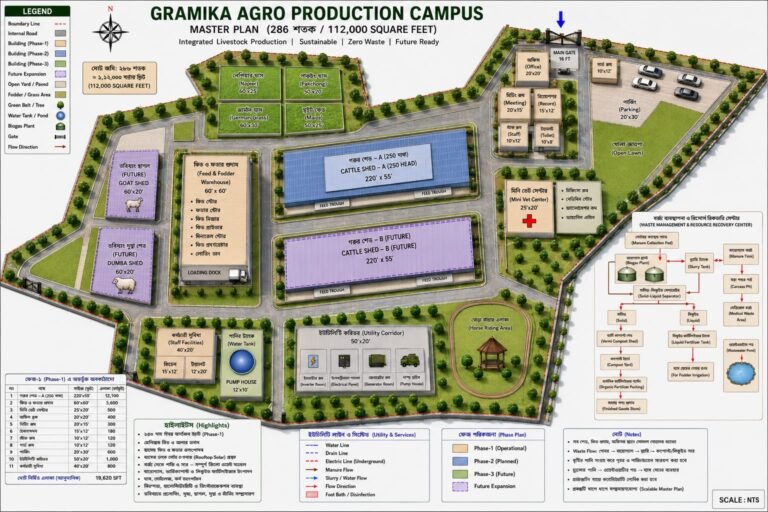
The Full Campus, Fully Built Out
When the campus is complete, it becomes a small ecosystem of its own : production, processing, learning, and hospitality, all in one place.
Main administration building
Full 250-cattle shelter with room to grow
Full-scale feed and fodder warehouse
Industrial feed mixer, grinder, and silage bunker
Commercial biogas plant
Compost and vermicompost unit
Central water supply system
Electrical substation and backup generator
Rooftop solar green-energy system
Central CCTV and integrated security
Modern meat processing unit
Agro-experience zone with horse riding
R&D and training centre for local farmers
A B2B supply hub linking the campus to the wider market
Take a Little of the Village Home
Before you leave, drop by the GRAMIKA showroom on site. Honey, ghee, pickles, spices, seasonal fruit, and other farm produce — all in one place. Plus handcrafted keepsakes from local artisans.
Frequently Asked Questions
Baro Dhormopur, Lalmai, Cumilla : about a three-hour drive from Dhaka.
Yes. We welcome pre-booked visits. Please call ahead so our team can host you properly: +8801328440066.
Cattle for beef, goats, and dumba in the first phase. A small dairy line is planned for a later phase.
No. Our animals grow at their natural pace.
From our own land. We grow the grass and process it in our own facility.
It becomes biogas for cooking and electricity, and vermicompost for the fields. Nothing is thrown away.
Yes. Reach out through the contact form and our team will guide you to the right channel.
Yes. We plan to run a training centre and a B2B supply hub in later phases, and we already buy local produce and hire from nearby villages.
Curious? Come visit the campus.
We welcome partners, farmers, schools, journalists, and anyone who cares about how their food is made.
Send Us a Message
Board Approval & Governance
Every step of the project is guided by the DPR (v1.4, July 13, 2026) approved by the GRAMIKA Board of Directors.
Board-approved Master Plan (286 shatak)
Board-approved Master Plan (286 shatak)
Integrated financial model and profit-sharing policy approved
Asset depreciation and maintenance fund policy approved
Future ecosystem linkage: Meat Shop, B2B Supply, Cattle Trading, Qurbani Business Unit
Where the Campus Lives
GRAMIKA Limited
Baro Dhormopur, Lalmai, Cumilla, Bangladesh.
Hotline
+8801328440066
From Dhaka
2h 40m
From Chittagong
1h 15m
Nearest highway landmarks
- Dhaka–Chittagong Highway (N1)
- Lalmai Bus Stand — 3 min
- Lalmai Thana — 5 min
- Public Transport
Public Transport
- Bus: Frequent buses from Dhaka, Chittagong, Cumilla and nearby districts.
- Train: Nearest station — Laksam Junction, approximately 15 km away.
- CNG/Auto: Easily available from Lalmai Bus Stand.
Get Directions
Click the button below to open Google Maps for step-by-step directions.